Description & Call for Papers
The 1st WFIEd International Conference for Quality Education invites researchers, academics, policymakers, practitioners, and students to submit original papers related to the conference theme, “Ensure Inclusive and Equitable Quality Education and Promote Lifelong Learning Opportunities for All.” The conference welcomes innovative ideas, empirical research, and practical insights that contribute to understanding and advancing inclusive, accessible, and sustainable education.
This conference serves as an international forum to discuss current challenges and future directions in achieving quality education across diverse educational contexts and levels. Particular attention is given to issues of inclusion, equity, and access in different sociocultural and institutional settings, including those in underrepresented and resource-constrained contexts. Selected papers will be presented during the conference and considered for publication in a journal managed by the World Forum for Inclusive Education or partner journals, subject to peer-review processes.
By bringing together perspectives from academia, policy, and practice, the conference aims to generate insights that support evidence-based decision-making, foster collaboration, and contribute to ongoing efforts to improve the quality and inclusiveness of education systems.
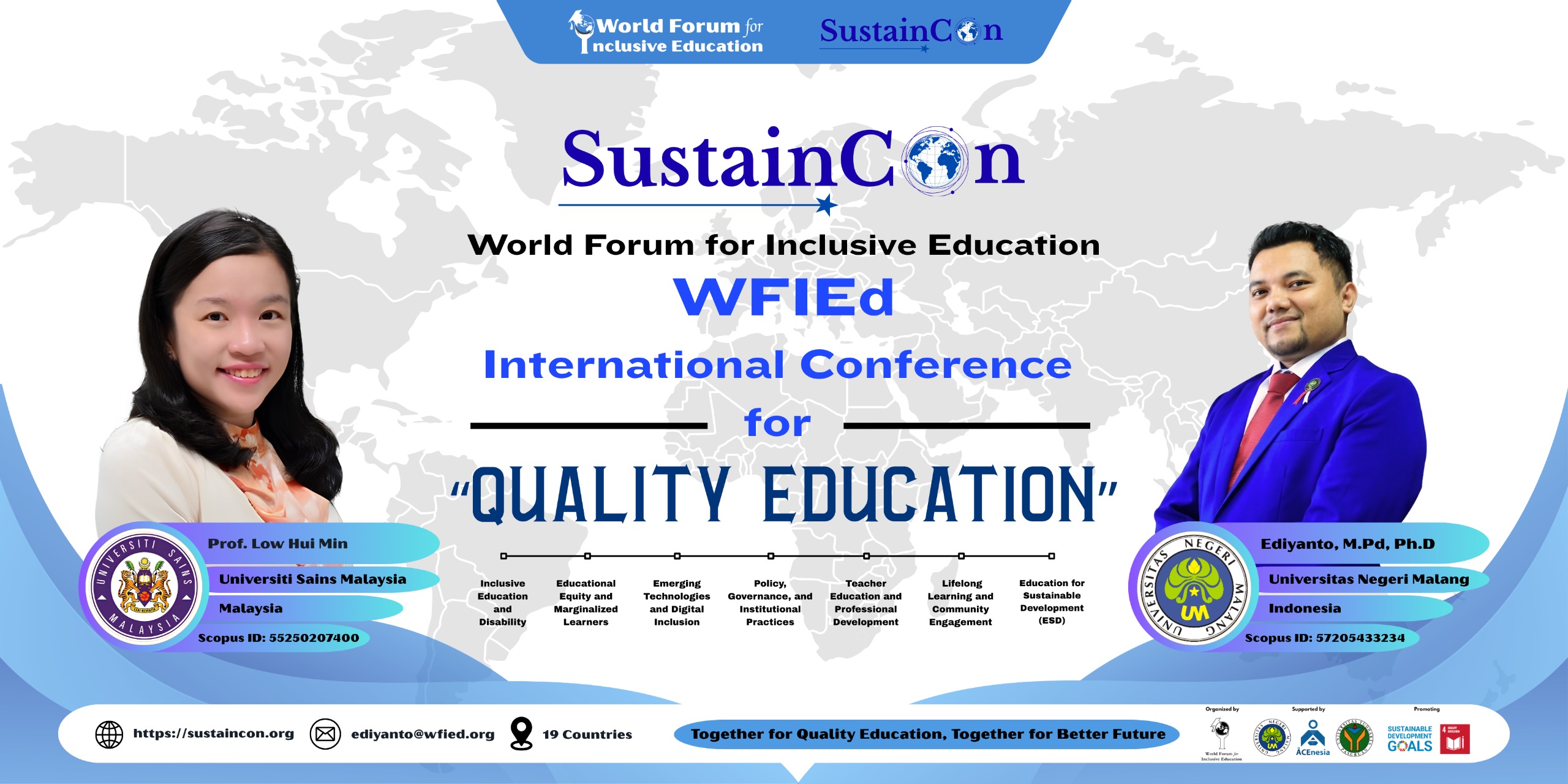
Keynote Speaker
Thematic Scope
Submissions may address, but are not limited to, the following themes:
1. Inclusive Education and Disability
Experiences of students with disabilities in schools and higher education; Curriculum accessibility and Universal Design for Learning (UDL); Institutional practices and support systems for inclusion; and Assistive technologies and digital accessibility.
2. Educational Equity and Marginalized Learners
Gender, poverty, and educational disadvantage; Education in rural and underserved communities; Indigenous and culturally responsive education; and Refugee and displaced learners.
3. Emerging Technologies and Digital Inclusion
Technology-enhanced learning and inclusion; Digital access and participation; AI and inclusive digital pedagogy; and Technology use in low-resource settings.
4. Policy, Governance, and Institutional Practices
Inclusive education policies and implementation; Governance for equitable education systems; Quality assurance and inclusion; and Financing inclusive education.
5. Teacher Education and Professional Development
Teacher preparation for inclusive classrooms; Professional learning and inclusive pedagogy; and Teacher beliefs and practices.
6. Lifelong Learning and Community Engagement
Adult education and lifelong learning; Community-based education initiatives; and Non-formal and informal learning
7. Education for Sustainable Development (ESD)
Sustainability and social justice in education; Inclusive approaches to ESD; and Education and the Sustainable Development Goals (SDGs).